Racquet sports and the fixed timetable
You do not choose when a match starts, how long it lasts, or when you get to stop. Tennis and its relatives are the clearest case of exposure being scheduled for you.
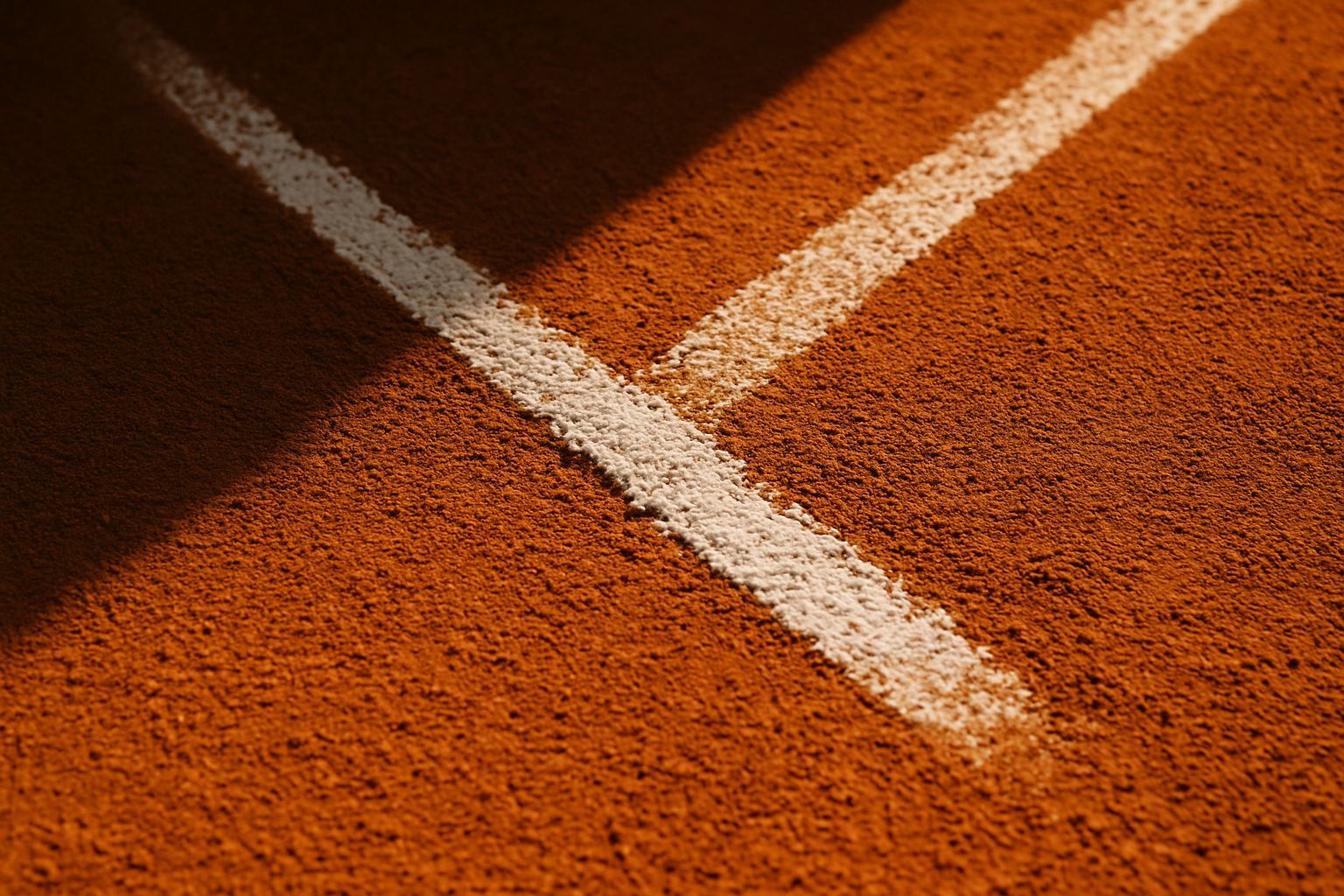
In racquet sport, the two variables that matter most for exposure, the hour of day and the duration, are decided by a court booking and a match format rather than by you. That makes front-loading and the change of ends the whole plan: apply properly beforehand, wear what the format allows, and use the sit-down as a scheduled routine rather than a chance you might take.
A club allocates you a court at one o'clock. A league fixture starts when it starts. A tournament puts you on when a court frees up. In none of these cases do you get the option that helps most, which is moving the session out of the strongest part of the day. That is what makes racquet sport a distinct case.
The second feature is that duration is genuinely open-ended. A match that could be over in fifty minutes can run to two and a half hours, and nobody knows in advance which it will be. Planning for the short version and getting the long one is the single most common failure.
| Surface | Angle to the sun | Exposed for | What removes protection | Control that holds |
|---|---|---|---|---|
| Face and under the chin | High from above, plus reflection off a pale court | 2-4h | Sweat drainage, wiping with a wristband or sleeve | A cap or visor, plus a settled application before play |
| Serving arm and shoulder | Raised repeatedly and held overhead | 2-4h | Sleeve edge, sweat, wristband | A sleeve. It also stays put, unlike anything applied |
| Back of the neck | Steep, and worse when looking up to serve | 2-4h | Collar movement, sweat | A collar worn up, which most tennis shirts already have |
| Legs, front and back | Front facing forward, back exposed on the change of direction | 2-4h | Almost no friction | One thorough application before play holds reasonably here |
| Ears and nose | High angle, and lit again from the court surface | 2-4h | Never applied rather than removed | A cap with a peak that actually reaches the ears |
| Hands | Racquet hand gripping, other hand tossing | 2-4h | The grip, constantly | Accept the playing hand. Do the other one |
The change of ends is the whole opportunity
Racquet sport has one genuine advantage over most of the disciplines on this site: it has built-in, regular, legitimate stopping points. A change of ends in tennis, a break between games, a gap between sets. These are the most reliable reapplication windows in any sport, and they are almost universally wasted.
The routine that works is short and fixed. At the first change of ends after an hour, do face, ears and the back of the neck, in that order, in under thirty seconds. Do the lips at the same time. Drink. Sit down. That is it. Doing the same three surfaces every time is what makes it survive the pressure of a close match, because the routine runs on autopilot rather than on judgement.
The practical requirement is that whatever you need is in the bag at the side of the court, reachable within the time you have, rather than in a car. A small tube and a lip product in a side pocket is the whole logistics problem solved.
Court surfaces and reflection
A pale acrylic hard court reflects noticeably more than grass. So does a light-coloured artificial surface. The consequence is a load arriving from below as well as above, which is why players on hard courts burn under the chin, under the nose and on the underside of the forearms, all of which are surfaces facing downwards and therefore never treated.
Clay behaves differently again: it is less reflective than pale acrylic but it is dusty, and dust plus sweat plus a wristband is an effective abrasive on the forearm. Grass is the least reflective of the common surfaces, which is one small mercy in a British summer.
Padel and tennis players sometimes borrow the swimming rule about waterproof formulations, on the grounds that they finish a match soaked. It does not transfer.
The removal on court is sweat drainage down the face plus a wristband being used as a towel dozens of times per set. What holds up under that is a cap, a collar and a routine at the change of ends, not a claim about behaviour in water.
Kit within the rules
Racquet sports mostly permit more cover than players use. Collars are standard on tennis shirts and are frequently worn folded down, which loses the one thing they were shaped to do. Long sleeve playing tops exist and are worn by professionals in strong sun without any difficulty. Caps and visors are permitted almost everywhere.
| Item | Usual choice | Exposure argument | Practical note |
|---|---|---|---|
| Cap or visor | Visor, for comfort | A cap covers the scalp and parting, a visor does not | A visor plus a decent application to a parting is a workable compromise |
| Collar | Worn down | Worn up it covers the surface most often burned on court | Costs nothing and requires no new kit |
| Sleeve length | Short | A long sleeve top removes the serving shoulder problem entirely | Light long sleeve tops are cooler in strong sun than most players expect |
| Wristbands | Used to wipe the face | Every wipe moves product from forehead into the eye | Wipe outward across the temple rather than downward across the brow |
| Sunglasses | Rarely worn | Ball tracking makes it awkward, but bright courts are hard on the eyes | Worth trying in practice rather than in a match |
Coaching sessions, which are worse
A coach standing on a court for four or five hours feeding balls is in a different category from a player. The duration is longer, the position is static, the exposure is daily through the summer, and it is work rather than sport. Coaches are effectively outdoor workers, and the occupational framing in the work section of this site applies to them directly, including the duties a club has when it employs them.
The same applies to juniors in a holiday camp, where children are on court for hours at a time under a club's supervision. That is a duty-of-care question for the club rather than a personal choice by a nine year old, and it is answered with shade, session timing and a kit policy rather than by hoping everybody brought something.
Hard courts get very hot and matches are long. Heat illness is a more immediate risk than ultraviolet exposure and it needs a different response. The NHS publishes guidance on heat exhaustion and heatstroke, and 999 is the number if somebody is seriously unwell. Clubs should know their governing body's guidance on extreme heat before the day it matters.
The plan for a fixed session
- Assume the long version of the match, not the short one.
- Apply properly at home, on dry skin, before you dress. Ears, neck and the backs of the hands included.
- Wear the cap and put the collar up.
- Put a small tube and a lip product in the side pocket of the bag, not in the car.
- Do face, ears and neck at the first change of ends after an hour, then again if the match goes long.
- If you are coaching rather than playing, read the section on outdoor work instead, because your day is a shift.
Questions
Is a cap or a visor better for tennis?
A cap covers the scalp and the parting, which are the highest-angle surfaces on the body and where nothing applied survives a match. A visor leaves both exposed. If a visor is preferred for vision or comfort, the scalp needs dealing with separately.
Can I reapply during a match?
The change of ends is a legitimate, regular and generous window compared with most sports, and it is the most reliable reapplication opportunity available in any discipline covered here. A fixed thirty second routine covering face, ears and neck fits comfortably.
Do hard courts really reflect that much?
Pale acrylic and light artificial surfaces reflect noticeably more than grass, which produces a load arriving from below. That is why players burn under the chin, under the nose and on the underside of the forearms, all surfaces facing downwards that nobody thinks to treat.
What should a club do about junior camps?
Treat it as a duty of care rather than as individual choice: shade at the side of the court, session timing that avoids the strongest hours where the booking allows, a stated kit expectation including hats, and scheduled breaks. That is far more reliable than hoping each child arrives prepared.
Are long sleeves realistic in summer tennis?
Light long sleeve playing tops are used at the top of the sport in strong sun and are cooler than many players expect, because they keep direct radiation off the skin. They also solve the serving shoulder, which is otherwise a surface held overhead repeatedly for hours.
This article has no commercial links. Nothing in it is sponsored, no product is named and no payment of any kind was received for anything written here. Water Resistant SPF is published by Water Resistant SPF and recommends no products at all. Our funding is set out in full on the about page.
The session brief
One email a month on exposure, heat and sun protection for people who train outdoors and people who work outdoors. No product recommendations, because we do not make any. Each issue carries a single clearly labelled sponsor line that has no influence on anything above it.
We store your address to send the newsletter and nothing else. Unsubscribe in one click. See the privacy notice and the rate card.