Shade and route planning
Shade costs nothing, works on every uncovered surface at once, never degrades and never needs reapplying. It is also the control people are least likely to plan for.
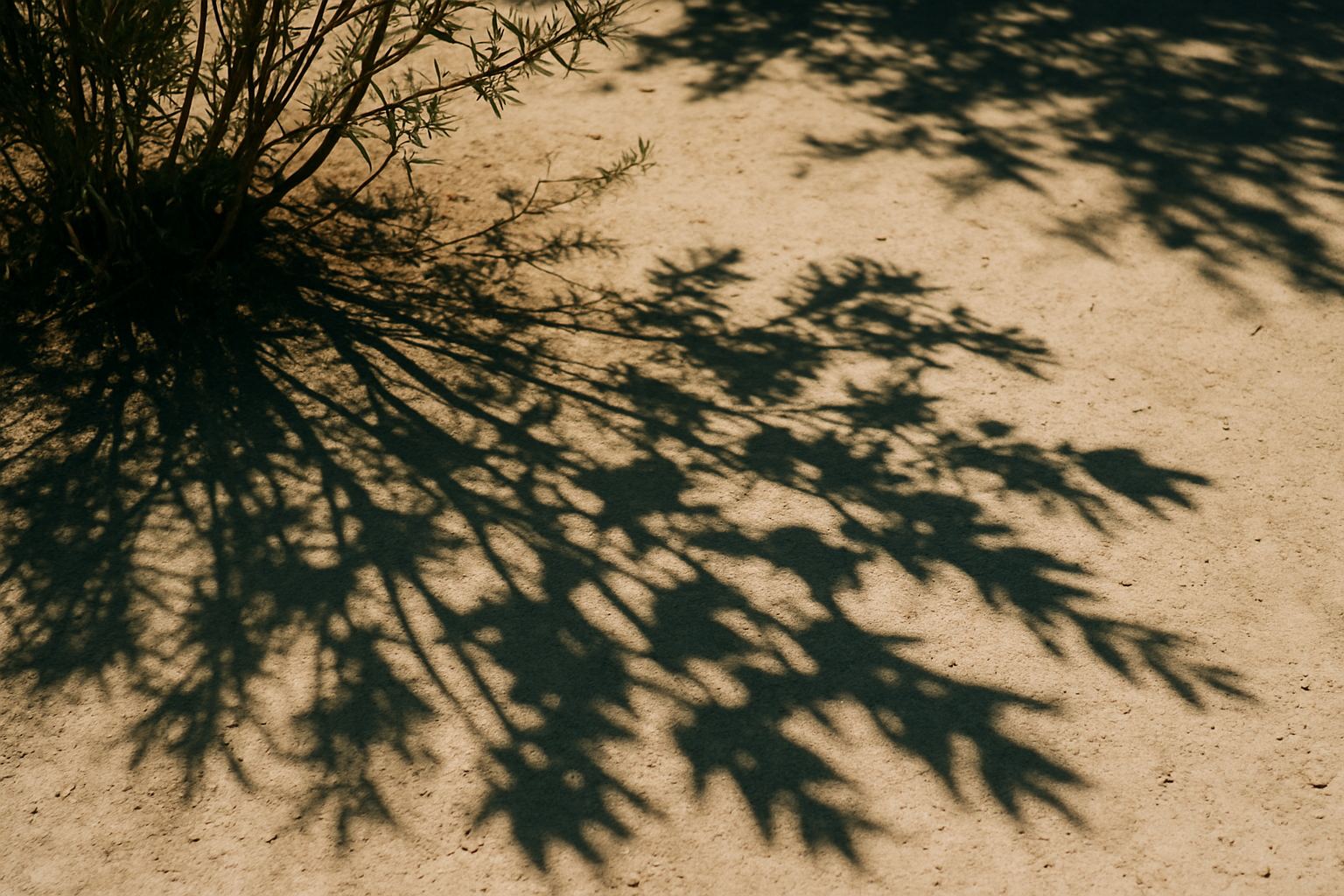
Shade is the only control that works on every uncovered surface simultaneously, costs nothing, does not degrade over a session and needs no reapplication. The reason it is underused is that it has to be planned into a route or a session in advance, and almost nobody does that. On open moor, pitch, course or site it genuinely does not exist, which is where everything else has to work harder.
Of all the controls in the exposure map method, shade is the one with the fewest weaknesses. It does not wear off. It does not migrate into your eyes. It is not removed by a strap. It does not need to be bought, carried, remembered or reapplied. It works on your ears and the back of your neck at the same time as your forearms, without you having to think about any of them individually.
Its single weakness is that it is a property of a place, and therefore has to be planned for rather than carried. That is exactly why it is neglected. Route choice is made on distance, terrain, traffic and how nice it is. Shade almost never enters the decision, and yet on a hot bright day it is the variable that changes the exposure most.
Where shade is and is not
| Environment | Shade | Practical consequence |
|---|---|---|
| Woodland and forest trail | Substantial, though dappled rather than complete | Choose these routes on the brightest days. The cost is usually a slower surface |
| Tree-lined urban street and park | Patchy but real, and on one side of the street | Run on the shaded side. It is free and requires no decision in advance |
| River and canal path | Often lined with trees for long stretches | Frequently the shadiest long route available near a town |
| Lane and hedgerow | Partial, and depends on the direction of travel | An out-and-back gets shade in one direction and none in the other |
| Open moor and fell | None | Cover has to do everything. Plan the kit for the open section |
| Pitch, course and track | None on the playing surface | Shade has to be built at the edge. That is a club decision |
| Construction site and open ground at work | None unless provided | Provision of shade is part of an employer's response, not an individual's |
| Crag base and boulder field | Often available and rarely used | Move the bags and the belay. It costs nothing |
Planning a route for shade
Doing this properly takes five minutes with a map and pays off for a whole summer. The questions are simple: which of my regular routes has tree cover, which side of the road is shaded at the hour I usually train, and which sections are unavoidably open. The answers do not change, so the exercise only needs doing once.
- List your regular routes and mark the ones with substantial tree cover.
- Note the direction of travel. A north-south lane with a tall hedge on one side gives shade in one direction and none in the other.
- Note the hour. Shade at seven in the morning is not the same as shade at one in the afternoon, because the shadows are different lengths and on different sides.
- Identify the longest continuous open section on each route. That section sets the kit requirement for the day.
- Keep one shaded route as the default for bright days, and use it rather than improvising.
| Surface | Angle to the sun | Exposed for | What removes protection | Control that holds |
|---|---|---|---|---|
| Easy run, morning | Low sun, long shadows, plenty of shade available | 30-60 | Nothing | Any route. This is the session to do at any hour |
| Long run, weekend | High sun, longest duration of the week | 2-4h | Nothing, but nothing shades an open route either | Route choice. Pick the woodland or riverside option |
| Interval session on a track | High sun, no shade on the infield at all | 60-120 | Standing recoveries in full sun | Stand in the stand shadow between reps |
| Club ride | Long, open, and not your choice of route | 4h+ | Continuous | Cover, because shade is unavailable |
| Match or fixture | Fixed hour, open pitch, no shade on the field | 2-4h | Continuous | Shade at the bench. A club purchase, not a personal one |
| Evening session | Low sun, much reduced load | 60-120 | Little | The most valuable scheduling change available to most people |
The quality of shade matters
Not all shade is equal. Full shade under dense tree cover or a solid structure removes direct sunlight, though some ultraviolet still arrives as scattered light from the open sky, which is why deep shade reduces exposure substantially rather than eliminating it. Dappled shade under sparse foliage is considerably less effective than it feels, because the gaps let direct sunlight through and the eye adapts to the average rather than registering the peaks.
A structure with a solid roof and open sides, like a dugout or a marquee, is very effective against direct sun and still allows scattered light and reflection from the ground to arrive. That is more than good enough for a bench or a waiting area, and it is why the Health and Safety Executive's guidance for outdoor employers treats provision of shade as a practical measure rather than a token one.
Shade guidance in general sun advice is usually framed around a beach: sit under a parasol in the middle of the day. It is sound and it is useless to somebody who has to be moving.
The land sport version is different. It is about route selection, which side of the street you run on, where the belay is set, where the bench is, and which hour a session happens. None of that involves stopping, which is why it works where beach advice does not.
Building shade where there is none
For clubs, employers and event organisers, the absence of shade is a solvable problem rather than a fact. A covered bench, a gazebo at a junior session, a marquee at an athletics meet, a shaded rest area on a site. Each protects everybody present at once, works every session for years, and does not depend on anybody remembering anything, which is what makes it the highest value intervention available to an organisation.
It is also the measure that occupational guidance keeps returning to for outdoor work, because it sits high in the hierarchy of control: it reduces the exposure at source for a group rather than relying on personal protection by individuals. That is a well established principle in health and safety and it transfers directly to sport.
Deep shade greatly reduces exposure but does not remove it, because scattered light from the open sky and reflection from the ground still arrive. On snow, sand or pale concrete the reflected component in shade can be significant. Shade is the best single control available, not a substitute for the rest of the plan.
The one thing worth doing today
Pick your most regular session, the one you do two or three times a week all summer, and work out whether there is a shadier version of it that costs you nothing. For most people there is, and switching to it changes more about their annual exposure than any product decision they will ever make, because it applies to every session rather than to the one day they remembered to be careful.
Questions
How much does shade actually reduce exposure?
Deep shade under dense cover or a solid structure removes direct sunlight and greatly reduces the total, though scattered light from the open sky and reflection off the ground still arrive. Dappled shade is considerably less effective than it feels, because direct sunlight comes through the gaps.
Is running on the shaded side of the street worth it?
It costs nothing, requires no equipment and applies to every uncovered surface at once. Over a summer of regular sessions it is one of the larger changes available, and it takes no planning beyond noticing which side is shaded at the hour you run.
What should a club provide?
Shade where people are stationary: benches, dugouts, waiting areas at meets, and cover at junior sessions. It protects everybody present at once and works every session for years, which no individual measure does.
Does shade help with heat as well?
Yes, and on the hottest days that is the more immediate benefit. Heat illness develops faster than any ultraviolet effect and is more dangerous in the short term, so shade at a bench or a rest area is doing two jobs at once.
What if my sport has no shade at all?
Open moor, open pitch, open course and open site genuinely have none, which is why the other controls have to work harder there. Cover becomes the primary control, timing becomes valuable where it is available, and shade gets built at the edge for the periods when people are not competing or working.
This article has no commercial links. Nothing in it is sponsored, no product is named and no payment of any kind was received for anything written here. Water Resistant SPF is published by Water Resistant SPF and recommends no products at all. Our funding is set out in full on the about page.
The session brief
One email a month on exposure, heat and sun protection for people who train outdoors and people who work outdoors. No product recommendations, because we do not make any. Each issue carries a single clearly labelled sponsor line that has no influence on anything above it.
We store your address to send the newsletter and nothing else. Unsubscribe in one click. See the privacy notice and the rate card.