Sweat rate and session length
Sweat output is not constant, and neither is what it does to a protective film. The way a session changes over its length is the reason duration bands appear on every page here.
Sweat output climbs during the first part of a session as core temperature rises, then settles at a rate set by effort and conditions, so the load on any protective film is lowest in the opening minutes and highest thereafter. Session length, not air temperature, is therefore the variable that should drive the plan, which is why every article here carries a duration band.
Two people go out on the same warm afternoon. One does forty minutes, the other does four hours. They apply the same thing at the same time in the same way. It is tempting to think the second person simply has six times the problem, but that is not what happens. The second, third and fourth hours behave differently from the first, and understanding why is what makes duration the organising variable on this site rather than temperature.
What happens to sweat output through a session
At the start of a session, output is low. Core temperature has not risen, the thermoregulatory response has not been triggered in earnest, and the skin is dry. During the first stretch, as core temperature climbs, output rises steeply. It then settles into a rate determined by how hard you are working, how hot and humid it is, how much airflow there is, and how well acclimated you are. That settled rate can persist for hours.
Two consequences follow. The first is that anything applied to dry skin gets a grace period, which is why applying well before you start and letting it settle is worth doing. The second is that the load in later hours is relentless rather than escalating: it does not get dramatically worse, but it never lets up either, and it is combined with an accumulating friction total from kit.
Individual variation here is very large and is not something to guess at. Some people are prolific sweaters at modest effort, others barely damp at threshold. Sweat rate also depends heavily on humidity, because in humid air sweat cannot evaporate and therefore drips rather than cools, which is why a muggy twenty degree day can feel worse than a dry twenty eight degree one and why more product ends up in your eyes on it.
In water there is a single removal event and then it is over. The plan is bounded by the swim.
In land sport the removal is a rate, not an event. A settled sweat output over three hours, plus the friction of a strap that has moved a few thousand times, is a fundamentally different kind of load, and it is why duration matters more than any other single variable in planning.
The duration bands used on this site
Every article here carries a band, marked in a single colour used nowhere else on the site. The bands are not a claim about how long anything lasts. They are a way of describing the kind of session a piece of guidance is about, because the right answer for twenty five minutes is not the right answer for five hours.
| Band | Typical sessions | What dominates | Plan shape |
|---|---|---|---|
| 0-30 | Interval session, short dog walk, quick job outside | The application you started with | One good application, plus a hat if the sun is high |
| 30-60 | Club run, short ride, singles set, mowing a lawn | Sweat beginning to move product on the face | Application plus a brow band or cap. Timing helps most |
| 60-120 | Long run, evening ride, a match, a garden afternoon | Friction lines and face drainage | Cover the friction lines. Use any break the format gives |
| 2-4h | Sportive, hill walk, round of golf, half a work shift | Cumulative friction plus continuous sweat | Cover becomes the main control. Product supplements it |
| 4h+ | Long mountain day, full round plus practice, full shift, cricket | Total dose across the strongest hours of the day | Cover, shade and scheduling. Product is the last layer |
Why temperature is the wrong variable
People dress and plan by temperature, which is understandable and mostly wrong for this purpose. Ultraviolet radiation and air temperature are not the same thing and do not move together. A clear, cold, bright April day at altitude can present a higher ultraviolet load than a hazy, humid, uncomfortable August afternoon. The Met Office publishes a forecast index precisely because people cannot infer it from how warm it feels.
The World Health Organization's global solar ultraviolet index guidance sets out the internationally agreed scale and the point on it at which protective measures are advised. It is the same scale the Met Office forecasts against, and it is a far better input to a session plan than a thermometer. In practice the two useful numbers to look at the night before are the forecast index and the number of hours you intend to be out.
| Surface | Angle to the sun | Exposed for | What removes protection | Control that holds |
|---|---|---|---|---|
| Hour one | Sun climbing, film intact | 0-30 | Almost nothing yet | The application you did at home |
| Hour two | Sun near its strongest | 60-120 | Face drainage established, strap lines forming | The cap, band and collar you chose to wear |
| Hour three | Strongest part of the day | 2-4h | Friction total mounting, product largely gone from rubbed areas | Cloth. Everything else is supplementary by now |
| Hour four | Sun falling but still substantial | 4h+ | Fatigue, so habits lapse and hats come off | Whatever you decided in advance, because decisions get worse late |
Salt, skin and the end of a long day
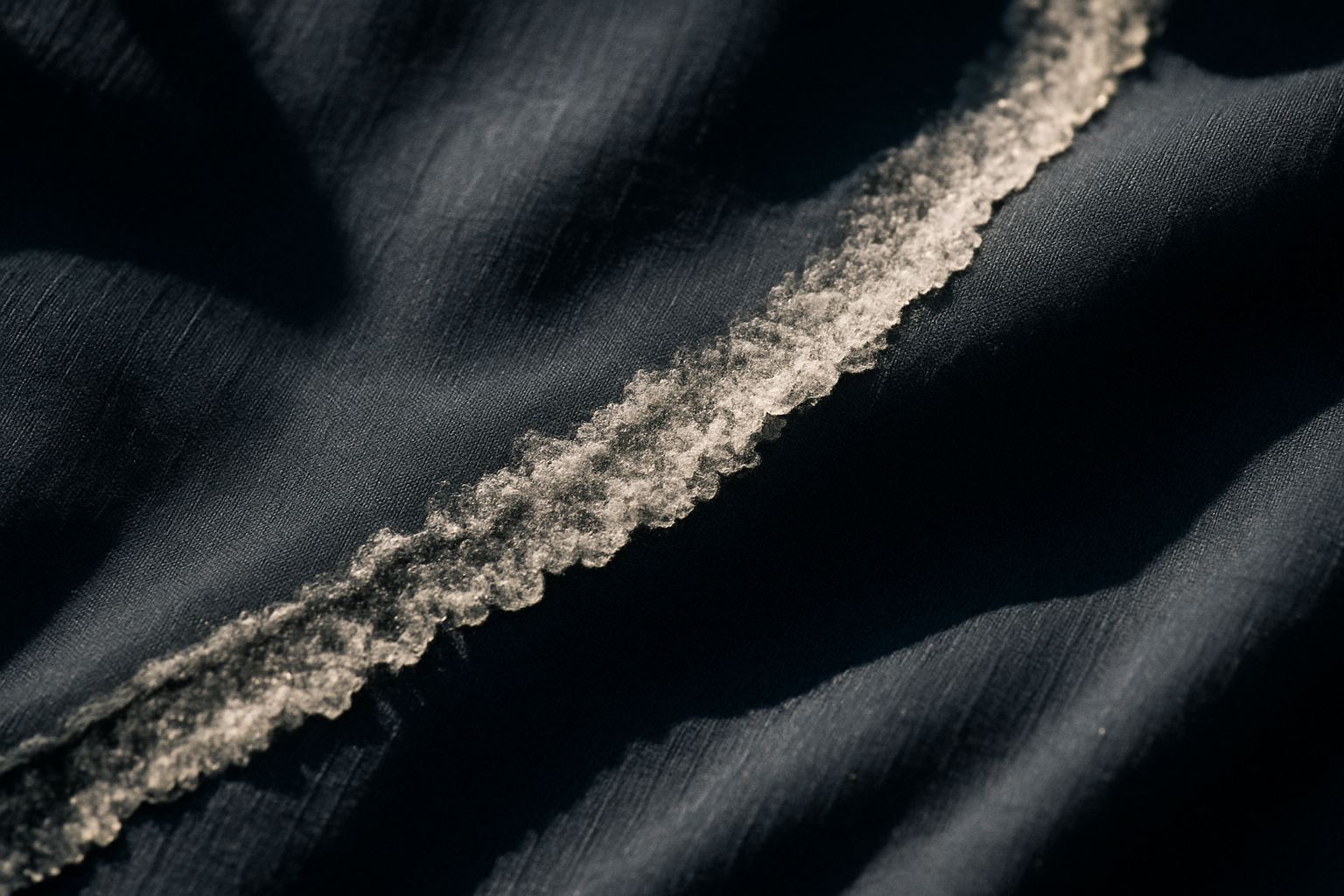
One visible consequence of a long session is the salt left behind as sweat evaporates. It is the white crust on a dark jersey and the gritty feel on a face after a hot ride. Salt on skin combined with hours of strap movement leaves skin that is drier and more easily irritated than it started, which is one reason a hot week of training can leave a face feeling raw even without any burning.
The practical response is unremarkable: rinse properly afterwards rather than letting salt dry on, and be aware that skin at the end of a hard training block is not in the same state it was at the start. If skin becomes sore, cracked or persistently irritated, that is a question for a pharmacist or a GP rather than something to manage with more of the same.
Building the band into your planning
- Look at the forecast index and your intended duration the evening before.
- Pick the band the session falls into and use the plan shape for that band rather than improvising on the day.
- If the session crosses two bands, plan for the longer one. Sessions overrun far more often than they finish early.
- Move the session out of the middle of the day if it is genuinely movable. This is worth more than every other step combined and costs nothing.
- Note what actually failed afterwards. Strap lines, a burnt neck and a sore lip are all data, and they will be the same next time unless the plan changes.
This is why a training log is the right mental model. The people who manage this well are not the ones with the best product. They are the ones who treat exposure as another training variable, recorded and reviewed, in the same way they treat volume, intensity and sleep.
Questions
How much do people sweat during exercise?
The range between individuals is very wide and depends on effort, heat, humidity, airflow and how acclimated you are, so any single figure quoted at you should be treated with caution. What matters for planning is that output rises early in a session and then settles at a rate that persists, so the load on a protective film is continuous rather than occasional.
Does a higher sweat rate mean I need to reapply more often?
It means the surfaces exposed to sweat drainage, principally the face, will lose product faster, and it makes a brow band more valuable. It does not change the answer for high-friction surfaces, where kit rather than sweat is doing most of the removal.
Why does the site use duration bands rather than temperatures?
Because ultraviolet load and air temperature do not track each other, and because duration is the variable that changes the shape of the plan. A cold bright morning at altitude and a muggy warm afternoon can present very different exposure at the same comfort level.
Does acclimatisation change any of this?
Acclimatisation changes how you sweat and how you cope with heat, which affects performance and safety. It does not change how much ultraviolet radiation arrives, so the exposure plan stays the same even as the heat feels more manageable.
Is the white residue on my kit a problem?
It is salt left after sweat evaporates and it is normal. It is worth rinsing kit and skin properly afterwards rather than letting it dry on, both for the fabric and because salt plus hours of strap movement leaves skin drier than it started.
This article has no commercial links. Nothing in it is sponsored, no product is named and no payment of any kind was received for anything written here. Water Resistant SPF is published by Water Resistant SPF and recommends no products at all. Our funding is set out in full on the about page.
The session brief
One email a month on exposure, heat and sun protection for people who train outdoors and people who work outdoors. No product recommendations, because we do not make any. Each issue carries a single clearly labelled sponsor line that has no influence on anything above it.
We store your address to send the newsletter and nothing else. Unsubscribe in one click. See the privacy notice and the rate card.