Altitude and ultraviolet
Ultraviolet increases as you climb, and the air gets colder as it does. The two signals point in opposite directions, which is why hill days catch people out.
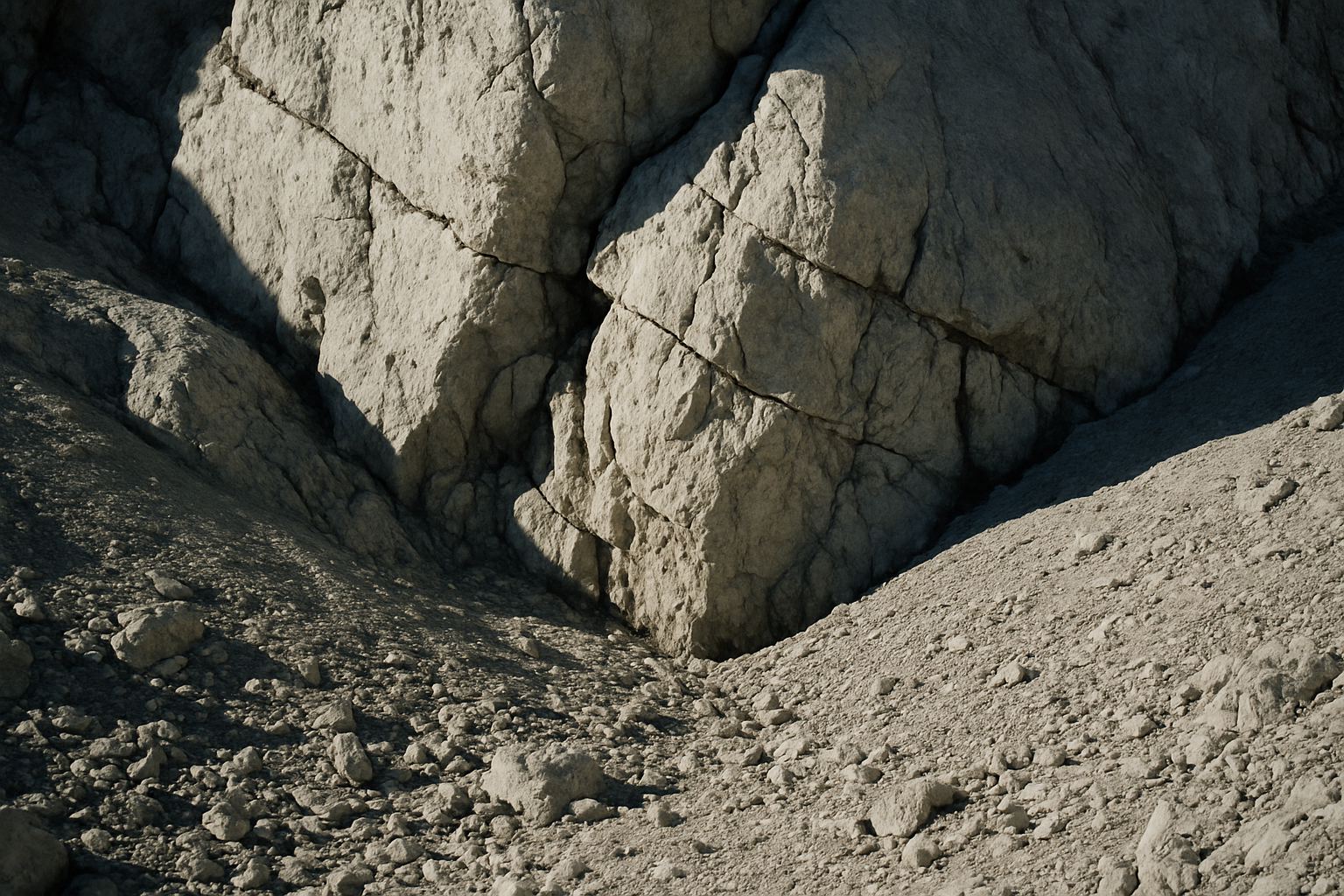
Ultraviolet radiation increases with elevation, because there is less atmosphere above you to absorb and scatter it, while air temperature falls at the same time. The result is that the environment feels safer as it becomes more exposing, which is the reason so many people come off a cold clear ridge burned. Cover and a brim, chosen at the car park, are the whole answer.
There is a specific kind of sunburn that only happens in the hills. It arrives after a day that never felt hot, on skin that was covered by a hat until the ascent got steep, on a face that spent four hours in a wind cold enough to need gloves. People come off the hill with a burned nose, red ears and a stripe of neck, and they are genuinely surprised, because nothing about the day felt like a sun day.
The mechanism is straightforward. Ultraviolet radiation is absorbed and scattered by the atmosphere on its way down. The higher you are, the less atmosphere is above you, and the more arrives at the ground. This is set out in the World Health Organization's guidance on the global solar ultraviolet index, which is the reference the Met Office forecasts against.
Air temperature, meanwhile, falls with height. So the two signals your body uses to judge sun exposure, warmth and brightness, come apart. It feels cold, so the instinct says the sun is weak. It is not.
The compounding factors on a British hill
Britain does not have Alpine altitudes, but a hill day here stacks several factors that multiply rather than add.
| Factor | Effect | Why it is easy to miss |
|---|---|---|
| Elevation | More ultraviolet arrives with less atmosphere above | The air is colder, which suggests the opposite |
| Clear air above cloud | Hill days often start below cloud and finish in bright clear air | The decision about kit was made in the cloud at the bottom |
| Reflection off pale ground | Scree, wet rock, water and snow all reflect upward | Surfaces facing downwards get a load nobody expects |
| Wind | Removes any sensation of heat and dries lips and skin | Comfort is used as a proxy for exposure and fails |
| Duration | Hill days routinely run four hours and more | The plan was made for the walk in, not for the day |
| Aspect | A south-facing slope in the middle of the day is a different environment | Route choice is made on navigation, not exposure |
| Surface | Angle to the sun | Exposed for | What removes protection | Control that holds |
|---|---|---|---|---|
| Face and nose | High from above, plus reflection off wet rock and any lying snow | 4h+ | Wind drying, wiping, sweat on the ascent | A brim if the wind allows, and a thorough application before setting off |
| Ears | Facing upward and outward, uncovered when a hat blows off | 4h+ | Never applied, and hats are removed on the climb | A hat with ear coverage, or a deliberate application habit |
| Back of the neck | Horizontal when the head is down on a steep ascent | 4h+ | Collar, pack strap, sweat | A collar up, or a cap with a neck flap |
| Backs of the hands | Facing upward with poles, or gripping | 4h+ | Pole straps, gloves on and off, rock | Gloves, which most people are carrying anyway |
| Under the chin and nose | Lit from below by reflection off snow or pale scree | 4h+ | Nothing removes it, it is never applied | Apply deliberately when snow is lying |
| Lips | Presented forward, wind-dried and reflected onto | 4h+ | Drinking, eating, wind | A lip product used at every stop |
Cloud, and the mistake it invites
Thin and broken cloud transmits a substantial amount of ultraviolet. Full thick overcast reduces it considerably, but the sky over a British hill is rarely one thing for a whole day, and the exact conditions that make hill walking pleasant, high broken cloud with sunny intervals, transmit a great deal. Cloud that is below you transmits nothing at all to you, because you are above it in bright air.
The practical rule that works is to stop using the sky as the input. Use the forecast index from the Met Office the night before, and use the duration of your day. Those two numbers produce a better decision than any amount of looking out of a window at eight in the morning in a valley.
There is no water-resistance question on a hill day, and yet people reach for the same mental model, assuming that a formulation which survives water will survive a mountain.
What removes protection on a hill is a pack strap, a hat coming on and off, wind drying, sweat on the ascent and six hours of time. Duration and cover are the levers. Nothing about behaviour in water is being tested.
The ascent and descent problem
A hill day has two distinct phases with different failure modes. On the ascent, effort is high, sweat production is high, the head is down, hats come off because you are too warm, and sleeves get rolled up. On the descent, effort drops, the wind is felt again, layers go back on, and the face is presented forward into whatever direction you are heading.
The moment things go wrong is usually the top of the climb: sweaty, warm, hat in a pocket, sleeves up, standing in clear bright air at the highest point of the day taking in the view for twenty minutes. That is the single most exposed twenty minutes of the day and it is spent in the least protected state.
The fix is a habit rather than an item. Whatever came off on the climb goes back on at the top, before the view, before the sandwich. It takes ten seconds and it removes the worst window of the day.
Poles, packs and the small friction lines
Hill kit adds friction lines that road walking does not have. Pole straps sit across the back of the hand and the wrist and move constantly. A pack has shoulder straps and a hip belt, both of which abrade for hours. A hat band across the forehead does the same. None of these is dramatic, but all of them are running for the whole day, which is what matters.
The response is the same as elsewhere: cover the friction line rather than treat it. Gloves for the hands, sleeves under the pack straps, and a hat that stays on so the band line is under cover rather than exposed.
Sun protection sits inside a properly planned hill day rather than instead of one. Navigation, weather, spare layers, food and telling someone your route all come first. If somebody becomes seriously unwell on a hill, mountain rescue is reached by calling 999 and asking for the police, then mountain rescue. We do not give treatment advice.
Spring, which is the season that catches people
March to May is the underestimated period. The sun climbs quickly in the sky through those months, snow may still be lying on high ground, the air is cold, hill days are long, and almost nobody has adjusted their thinking from winter. It produces a reliable annual crop of burned faces on people who would have been careful in July.
The same logic applies to a bright winter day above the snow line. The ultraviolet load is lower than in summer, but the reflection off snow is at its highest and the day can be long. The combination is why ski mountaineers and winter hill walkers are careful about it and summer walkers on the same ground are not.
| Season | Feature | What people get wrong |
|---|---|---|
| Winter above the snow line | Strong reflection, long shadows, cold | Assuming winter means no exposure |
| Spring | Sun climbing fast, snow still lying, cold air | No plan yet, because it does not feel like summer |
| Summer | Highest load, longest days, most people out | Hats off on the climb, and nothing at the summit |
| Autumn | Low sun, long days out, clear air | Low sun means the face is presented directly rather than the top of the head |
The hill plan
- Check the forecast index and the duration the night before, not the sky in the morning.
- Apply before you leave the car, including ears, the back of the neck, under the chin if snow is lying, and the backs of the hands.
- Wear a hat that stays on in wind and a collar you can put up.
- Wear sleeves under the pack straps.
- Put everything back on at the top before you stop for the view.
- Carry a lip product where you can reach it without taking the pack off, because otherwise you will not.
Questions
Does ultraviolet really increase with altitude?
Yes. There is less atmosphere above you to absorb and scatter it, so more arrives at the ground. The World Health Organization sets this out in its guidance on the global solar ultraviolet index, and it is one of the reasons mountain environments are treated as high exposure even when cold.
Why do I burn on cold days in the hills?
Because warmth and ultraviolet are not the same thing and do not move together. Air temperature falls with height while ultraviolet rises, so the environment feels safer exactly as it becomes more exposing. Wind makes it worse by removing any remaining sensation of heat.
Is a hat enough on a hill?
A hat handles the scalp, and with a brim it handles the ears and shades the face, which is most of the problem. It does nothing for the back of the hands, the forearms or anything lit from below by reflection off snow or pale rock, and it comes off on a steep climb, which is when the load is highest.
What about walking below cloud all day?
Thick overcast reduces ultraviolet considerably, but broken and thin cloud transmits a great deal, and hill days frequently start below cloud and finish above it in clear air. Using the sky as the input is unreliable, which is why a forecast index exists.
Do I need to worry in a British winter?
The load is lower than in summer, but reflection off lying snow is at its strongest, days out can be long, and the face is presented directly to a low sun rather than shaded by a brim. Winter hill days above the snow line are a genuine exposure and are treated as one by people who do them regularly.
This article has no commercial links. Nothing in it is sponsored, no product is named and no payment of any kind was received for anything written here. Water Resistant SPF is published by Water Resistant SPF and recommends no products at all. Our funding is set out in full on the about page.
The session brief
One email a month on exposure, heat and sun protection for people who train outdoors and people who work outdoors. No product recommendations, because we do not make any. Each issue carries a single clearly labelled sponsor line that has no influence on anything above it.
We store your address to send the newsletter and nothing else. Unsubscribe in one click. See the privacy notice and the rate card.