Clothing as the primary control
Cloth does not migrate, does not sting, is not wiped off by a strap and performs the same in hour four as in hour one. For anybody exercising long, it is the first control, not the last.
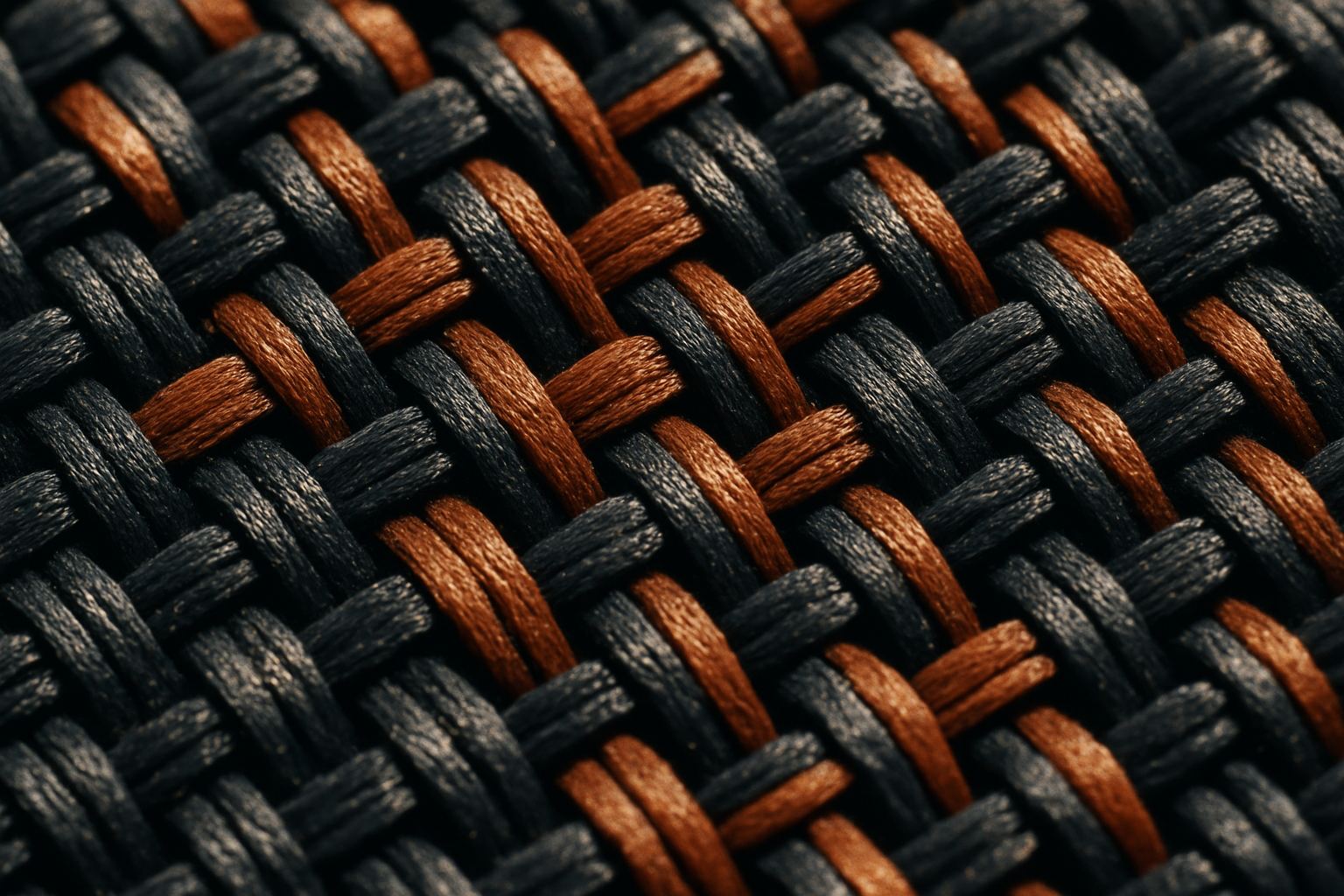
A garment's protection does not decay through a session. It does not migrate into your eyes, it is not removed by a strap, it needs no reapplication, and its performance at hour four matches hour one. That single property makes clothing the first control for any session over an hour, and applied product the supplement for whatever the cloth does not cover.
Every other control on this site has a failure mode that arrives with time. Applied protection degrades. Shade runs out when the route leaves the trees. Timing is unavailable if the fixture is at two o'clock. Cloth has none of that. A sleeve is exactly as effective at the end of a long day as at the start, and it requires no decisions, no memory and no stopping.
That is not a small advantage, it is a categorical one, and it is why the hierarchy used in occupational health guidance for outdoor workers places clothing above personal applied measures. The Health and Safety Executive's guidance for employers of outdoor workers treats cover as a substantive control, not as a comfort item, and the same reasoning transfers directly to anybody training for hours.
What determines how much a fabric does
Not all cloth is equal, and the differences are larger than most people assume. The factors that matter are reasonably well understood and are the basis of the standards behind garment labelling.
| Factor | Effect | Practical note |
|---|---|---|
| Weave density | A tighter construction with smaller gaps lets less through | Hold a garment up to a light. Visible gaps let light through |
| Fibre and finish | Different fibres and applied finishes behave differently | This is what garment claims are actually assessing |
| Colour | Darker and more saturated colours generally absorb more | This works against the instinct to wear white when it is hot |
| Stretch | Fabric stretched over skin has larger gaps between yarns | Tight garments give less than the same fabric worn loose |
| Wetness | Many fabrics let more through when wet | Relevant for anybody exercising hard for hours |
| Wear and age | Fabrics change with washing and use | A heavily worn favourite is not what it was when new |
What a UPF claim on a garment means
Garments sold with an ultraviolet protection claim are assessed and marked under defined standards. In Europe the relevant standard governs how apparel is tested and how the claim is marked on the garment, including requirements about which parts of the body the garment must cover for a claim to be made at all. Australia and New Zealand have their own long-established standard which is widely referenced internationally.
Described by function rather than by number: a marked claim tells you that the fabric has been assessed against a defined method and that the garment meets criteria about coverage as well as fabric. That is more informative than judging by feel, and it is particularly useful for very light summer garments where thin construction, open weave and stretch all reduce what the cloth does.
It is worth being clear about what such a claim does not do. It does not tell you what happens when the garment is wet, stretched over a shoulder or worn after three seasons. And it says nothing about the surfaces the garment leaves uncovered, which is where the rest of the plan goes.
| Surface | Angle to the sun | Exposed for | What removes protection | Control that holds |
|---|---|---|---|---|
| Long sleeve top with a collar | Covers shoulders, upper back, arms and the back of the neck | 4h+ | Nothing removes cloth | The single most useful garment in almost every sport here |
| Short sleeve top | Covers torso and shoulders, leaves forearms | 4h+ | Sleeve edge abrades the surface just below it | Better than a vest, worse than a sleeve. A reasonable default |
| Vest or singlet | Leaves shoulders, upper back and both arms | 4h+ | Straps abrade at the shoulder | Comfortable, and the largest uncovered area of any common kit |
| Arm cover or sleeves | Covers the full forearm and upper arm | 4h+ | Nothing | Removable, which is a virtue and a temptation |
| Long trousers or tights | Covers the tops of the thighs, which face almost straight up | 4h+ | Nothing | Rarely worn in summer sport, but the surface is large |
| Neck gaiter or buff | Covers the single most reliably burned surface in sport | 4h+ | Nothing | Weighs almost nothing and lives in a pocket |
The heat objection, taken seriously
The objection to cover is always heat, and it deserves a straight answer rather than a dismissal. Wearing more in hot weather can make you hotter, and heat illness is a more immediate risk than ultraviolet exposure. Anybody telling you to put a jacket on in a heatwave is giving bad advice.
But the comparison people make is usually wrong. It is not between bare skin and a jacket, it is between bare skin in direct sun and a light, loose, breathable garment in direct sun. Many people who try the second find it more comfortable, because keeping direct radiation off skin reduces the radiant load even as it adds a layer. This is why long, loose clothing is traditional in the hottest inhabited places on earth rather than the opposite.
The practical requirement is that the garment is genuinely light, genuinely loose and genuinely breathable. A heavy or tight garment is a different proposition and will come off. That is a purchasing point rather than a discipline point, and it applies to workwear even more than to sportswear.
Swimwear and rash vests are sometimes offered as an example of protective clothing, and they are, but the design problem is entirely different.
A rash vest is designed to work wet, tight and in water. A land garment has to work dry, loose, in wind, over hours, under a pack strap, while allowing you to shed heat. Those are opposite design constraints, which is why one does not substitute for the other.
The gaps a garment leaves
Cover is only cover where the cloth is. The recurring failures are all at edges and gaps, and they are the same in every sport:
- The gap between a sleeve edge and a glove cuff at the wrist.
- The neckline, which is the largest gap in almost every top and sits directly above the surface most often burned.
- A shirt riding up out of a waistband when bending, which is the gardening and groundwork failure.
- The strip of scalp at a parting, which no garment covers and a hat does.
- The top of the foot in low-cut shoes and short socks, which faces almost straight up.
- The ears, which nothing covers except a brim or a cap with real ear coverage.
The exposure map method exists to find these. Once you have run it for your own kit you will know where your gaps are, and they will be the same every session until you change something.
If it is genuinely hot, heat management comes first. Water, pacing, shade and knowing the signs matter more on that afternoon than any exposure decision. The NHS publishes information on heat exhaustion and heatstroke, and 999 is the number if somebody is seriously unwell. We do not give treatment advice.
Buying decisions, without recommending anything
This site names no products and takes no commission from anybody, so what follows is criteria rather than suggestions.
- Prefer a marked ultraviolet protection claim where you can get one, because it means the fabric has been assessed against a defined method.
- Choose light and loose over tight, because stretched fabric has larger gaps and holds heat against you.
- Choose a collar over a crew neck for anything long, because the back of the neck is the surface most reliably burned in sport.
- Check for gaps at the wrist and the waist while wearing it in your actual sport posture, not standing in a shop.
- For workwear, treat comfort in July as a functional requirement rather than a luxury, because uncomfortable kit gets removed and then protects nobody.
The thing worth remembering is that the cheapest version of this control is usually already in your wardrobe. A collared shirt worn with the collar up, a light long sleeve top you already own, a buff in a pocket. The purchase is optional. The decision is not.
Questions
Does a normal T-shirt provide sun protection?
It provides some, and how much depends on weave density, colour, fit and whether it is wet or stretched. A thin, pale, stretched, wet T-shirt gives noticeably less than a dry, darker, densely woven one worn loose. Garments with a marked ultraviolet protection claim have been assessed against a defined method, which removes the guesswork.
What does UPF on a label actually mean?
It indicates that the garment has been assessed under a defined standard governing how apparel is tested and how the claim is marked, including requirements about coverage. Described by function, it tells you the fabric has been measured rather than estimated, which is more than you can say for an unmarked garment.
Is a light-coloured shirt better in the sun?
For heat, a light colour reflects more visible light and can feel cooler. For ultraviolet, darker and more saturated colours generally absorb more. The two point in opposite directions, which is why weave density and fit matter more than colour for most garments.
Do sleeves make me hotter?
A light, loose, breathable sleeve in direct sun is frequently more comfortable than bare skin, because it keeps direct radiation off. A heavy or tight one is a different matter and will come off. If it is genuinely hot, heat management takes priority over everything here.
Should I wear more when the fabric is wet?
Many fabrics transmit more when wet, so a soaked thin top gives less than it did dry. It is another reason to prefer a garment with an assessed claim and a denser construction for long, hot sessions.
This article has no commercial links. Nothing in it is sponsored, no product is named and no payment of any kind was received for anything written here. Water Resistant SPF is published by Water Resistant SPF and recommends no products at all. Our funding is set out in full on the about page.
The session brief
One email a month on exposure, heat and sun protection for people who train outdoors and people who work outdoors. No product recommendations, because we do not make any. Each issue carries a single clearly labelled sponsor line that has no influence on anything above it.
We store your address to send the newsletter and nothing else. Unsubscribe in one click. See the privacy notice and the rate card.