After the session
The five minutes after a long day outdoors are the only time you get real feedback on your exposure plan. Here is what to write down, and where the site stops and a GP begins.
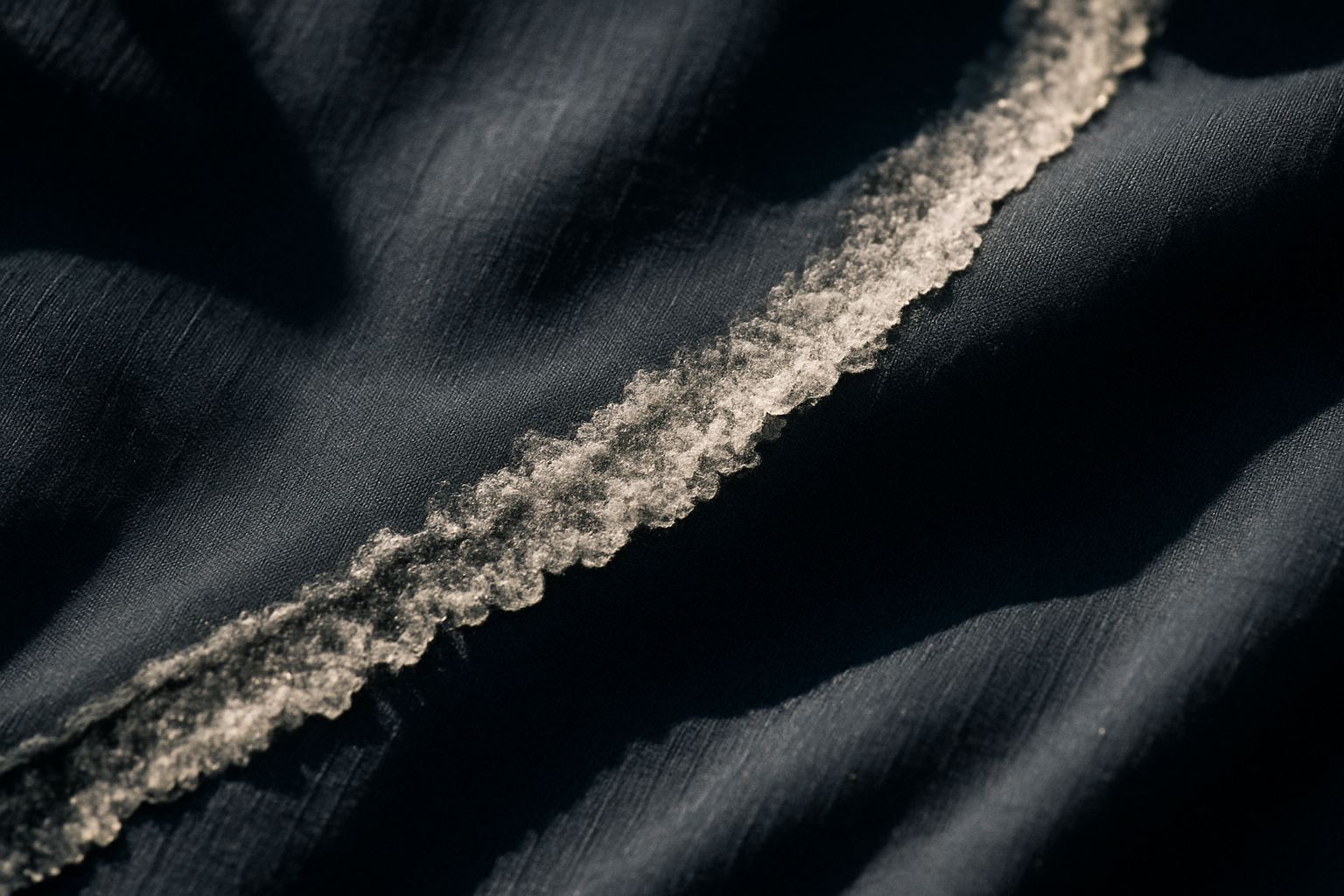
After a long day outdoors, three things are worth noting: which surfaces are sore or reddened, where the kit left a line, and which surface you now realise you never treated. Those three answers improve a plan more than any amount of reading. Anything that is changing, not healing or worrying you belongs with a GP, not in a log.
Training logs record distance, time, effort, sleep and sometimes mood. Almost none of them record exposure, which means the one activity that produces reliable feedback about an exposure plan, doing it and seeing what happened, generates no learning at all.
This article is about a five minute habit at the end of a long session or a shift, and about being clear where that habit stops. It is a planning exercise. It is not a health check, this site does not assess skin, and the last section of this piece is about where to take anything that is not a planning question.
The three things worth recording
- What was sore. Not in detail, just the surface. A reddened neck, a stinging forehead, sore lips, tight-feeling forearms. Each one is a row in your exposure map where the control failed.
- Where the lines are. Kit boundaries, strap outlines, sock lines, glove lines. These record where your cover actually was, as opposed to where you thought it was.
- What you never treated. Almost everybody, on running through it, finds at least one surface that has not been touched all season. Usually ears, the back of the neck or the backs of the hands.
Three lines in a notebook or a training app. At the end of a block, those lines are the specification for the next one, and they are drawn from your own evidence rather than from general advice, which is why they tend to be acted on.
The end-of-session routine
| Step | Why | Time |
|---|---|---|
| Rinse off salt and grit | Salt drying on skin after a long day, plus hours of strap movement, leaves skin drier and more easily irritated | Two minutes |
| Look at the friction lines | The inside of a strap, a collar, a cuff. A pale film on kit confirms where protection went | Thirty seconds |
| Check the surfaces you cannot see | Back of the neck, ears, parting. A mirror or another person | One minute |
| Note the three answers | Sore, lines, never treated | One minute |
| Look after the kit | Salt is hard on technical fabric and a saturated headband is useless next time | Ongoing |
| Surface | Angle to the sun | Exposed for | What removes protection | Control that holds |
|---|---|---|---|---|
| Back of the neck | Check it with a mirror, because you never see it | 0-30 | Collar, pack strap, posture | If it is sore or darker, the collar plan failed. Change it, do not repeat it |
| Forehead and hairline | The drainage route for everything the scalp produces | 0-30 | Sweat, cap band, wiping | A sore band means the hat came off. A stinging session means the drainage strip was treated |
| Ears and lips | The two surfaces missed by omission rather than removal | 0-30 | Nothing, which is the point | If they were never touched, add them to the sequence rather than to a resolution |
| Under a strap | Look at the kit, not the skin | 0-30 | Hours of shear | A pale film on the webbing confirms the loss. Cover or accept, do not reapply and hope |
| Backs of the hands | Compare with the palm | 0-30 | Grip, washing | A clear difference means gloves rather than another application |
Reading the friction evidence
The inside of a helmet strap, a collar, a glove cuff and a watch strap all carry a pale film after a long day. That film is a direct record of where protection was removed and roughly how much. It is the single most concrete piece of evidence available about the friction column of an exposure map, and it takes thirty seconds to look at.
If a piece of kit shows a heavy film, that surface is not being protected by anything you applied, and the answer is cover or acceptance rather than trying again with the same approach next week.
The swimming version of this routine is to rinse chlorine or salt water off and moisturise, and it is sound as far as it goes.
After a land session the residue is your own salt combined with the mechanical effect of hours of kit movement, and the useful additional step is the evidence-gathering one: looking at where the lines are and what the straps have taken off. That is information you cannot get any other way.
Skin at the end of a hard block
Skin at the end of a heavy training block is not in the state it was at the start. Repeated salt, repeated friction from the same straps in the same places, wind, sun and washing all accumulate, which is why a face can feel raw and a shoulder chafed after a hot week even without any burning.
The unremarkable responses are to rinse properly rather than letting salt dry on, to alternate kit so the same edge does not sit in the same place every day, and to give a genuinely irritated area a break from the thing that is irritating it. If skin becomes persistently sore, cracked, blistered or infected-looking, that is a question for a pharmacist or a GP rather than something to manage with more training.
Where this site stops
This needs to be unambiguous. Everything above is about kit, exposure and planning. None of it is about health, and this publication does not assess skin, describe what any mark means, or offer anything resembling a diagnosis or a treatment.
- A mole or a mark that is new, changing in size, shape or colour, itching, bleeding or not healing is a matter for a GP. Do not wait for it to be convenient.
- Sunburn that is severe, blistering, or affecting a young child needs a pharmacist or a GP. General information is on the NHS website.
- Eye pain, grittiness or affected vision after a bright day needs a pharmacist, an optometrist or a GP, urgently if vision is affected.
- Anybody who becomes confused, collapses or is seriously unwell in the heat needs 999.
- If you are not sure and it is not an emergency, NHS 111 exists for exactly that.
Cancer Research UK and the British Association of Dermatologists both publish plain guidance on what to look out for on skin, written by people qualified to write it. Those are the places to read about it. This site's job is to help you not accumulate the exposure in the first place.
There is a great deal of material online that drifts from sun protection into telling people what marks on their skin mean. It is not a line worth going near without qualifications, and getting it half right is worse than not attempting it. We describe exposure and controls, and we point at the NHS, a GP and the specialist charities for everything else.
Turning it into a plan
At the end of a block or a season, read the three lines back. They will name specific surfaces, and each one has a control that follows almost automatically. A sore neck means a collar. Ears that were never treated means adding five seconds to the application sequence. A heavy film on a glove cuff means the wrist gap needs closing. A burnt forehead means the hat came off.
None of those conclusions requires expertise, a purchase or persuasion. They come from evidence you gathered yourself, about your own kit and your own sport, which is why they are the ones that actually change anything.
Questions
What should I record after a long session?
Three things: which surfaces were sore or reddened, where your kit left lines, and which surface you realise you never treated. Three lines in a notebook, and at the end of a block they become the specification for the next one.
Why does my face feel raw after a hard week even without burning?
Salt drying on skin, repeated friction from the same straps in the same places, wind and washing all accumulate across a block. Rinsing properly rather than letting salt dry on, and alternating kit so the same edge does not sit in the same place, are the usual responses. Persistent soreness is a question for a pharmacist or a GP.
What does the pale film on my helmet strap mean?
That protection was mechanically removed from the skin under it and deposited on the webbing. It is direct evidence about the friction column of your exposure map, and it means that surface needs cover or explicit acceptance rather than another attempt with the same approach.
When should I see a GP about my skin?
Anything new, changing in size, shape or colour, itching, bleeding or not healing should be seen by a GP. This site does not assess skin or describe what anything means. Cancer Research UK and the British Association of Dermatologists publish plain guidance on what to look out for.
Do you give advice on treating sunburn?
No. General information is on the NHS website, and severe or blistering burns, or burns in young children, are a matter for a pharmacist or a GP. We describe exposure and controls, not treatment.
This article has no commercial links. Nothing in it is sponsored, no product is named and no payment of any kind was received for anything written here. Water Resistant SPF is published by Water Resistant SPF and recommends no products at all. Our funding is set out in full on the about page.
The session brief
One email a month on exposure, heat and sun protection for people who train outdoors and people who work outdoors. No product recommendations, because we do not make any. Each issue carries a single clearly labelled sponsor line that has no influence on anything above it.
We store your address to send the newsletter and nothing else. Unsubscribe in one click. See the privacy notice and the rate card.